
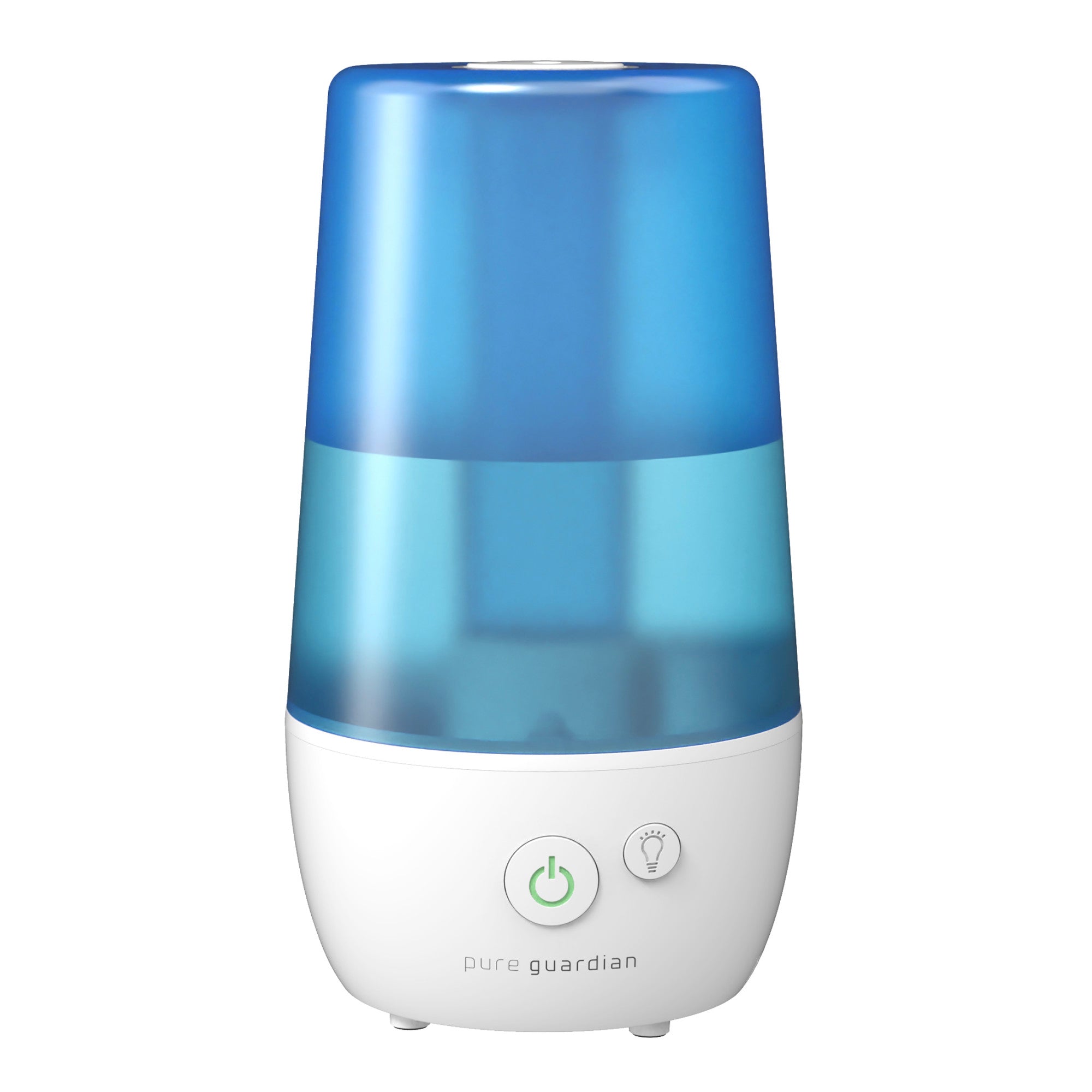
How to Clean a PureGuardian Humidifier: A Deep Clean Guide for the “Pink Slime”
You know the smell. The heating just kicked on, the air in the house is dryer than the Sahara, and you finally pulled the humidifier out of the closet. You turn it on, expecting crisp, hydrated relief for your sinuses. Instead? The room instantly smells like a damp basement or a high school locker room.
You check the tank, and there it is: that slimy, pinkish film coating the bottom, or worse, a crusty white ring around the base. Gross.
Look, I love my PureGuardian for its mist output—when it’s working, my hygrometer finally shows a comfortable 45% and the static electricity stops zapping my cat. But let’s be honest: I have trust issues with the “SilverClean” technology. It’s not magic. I’ve spent too many Saturday mornings with a bottle brush and vinegar to lie to you. If your nose is bleeding from the dry air but you’re afraid to turn the machine on because of what might be growing inside it, this guide is for you.
The “SilverClean” Reality Check
PureGuardian markets their units heavily on “SilverClean” technology. Essentially, the water tank has silver particles embedded in the plastic to inhibit the growth of mold and mildew. Does it help? Yes. Does it mean the unit is self-cleaning? Absolutely not.
Think of SilverClean as a shield, not a maid. It prevents the tank from turning into a swamp overnight, but minerals, bacteria, and that dreaded pink slime (which is usually an airborne bacteria called Serratia marcescens) will still accumulate. If you leave water sitting in there for three days, nature will find a way. You still have to scrub.
The Arsenal: What You Actually Need
Put the bleach away for now. We are descaling first. Never mix bleach and vinegar unless you want a chemistry lesson that ends with a call to Poison Control. Here is the strict equipment list needed to get the gunk out without destroying the ultrasonic plate.
- White Vinegar: The holy grail. Don’t use apple cider vinegar unless you want your room to smell like a salad.
- Water: Preferably warm.
- The Tiny Brush: Most PureGuardians come with a small brush clipped to the tank or base. If you lost it (we all do), an old soft toothbrush works.
- Uncooked Rice: Trust me on this. This is for the “Shaker Method.”
- Soft Cloth: Microfiber is best to avoid scratching the plastic.

Step 1: The Base (Where the Gunk Hides)
Unplug the unit. Seriously, pull the plug. Now, lift the blue tank off and set it aside. Look at the base unit. You will likely see some water pooling there—dump it out.
The star of the show here is the Ultrasonic Disk. It’s that little dime-sized metal circle, usually black or silver. If this has white scale (calcium buildup) on it, the diaphragm can’t vibrate properly, and you get weak mist or no mist at all.
The Protocol:
- The Soak: Pour straight white vinegar into the base cavity until it covers the bottom and the ultrasonic disk. Do NOT overfill.
- The Wait: Let it sit for 30 minutes. The acidity needs time to break down the mineral bonds. Go have a coffee.
- The Scrub: Come back and use the soft brush to gently loosen the scale around the ring and the transducer. It should flake off easily now.
CRITICAL WARNING: Look closely at the base. There is an air outlet vent (usually a small elevated opening that looks like a fan exhaust). DO NOT POUR WATER OR VINEGAR INTO THIS VENT. If liquid gets down there, it fries the motherboard. I’ve seen it happen. Don’t drown the electronics while trying to clean the plastic.
Step 2: The Tank (The “Can I Fit My Hand In?” Test)
This is my main gripe with PureGuardian. They make beautiful, sleek blue tanks, but unless you have the hands of a toddler, you cannot reach inside to scrub the corners. The opening is just too narrow. So, how do you get the slime off the walls?
The Rice Trick
This is a Geek Mom specialty. Since we can’t scrub with a sponge, we need an agitator.
- Pour 1 cup of white vinegar and 1 cup of water into the tank.
- Add a generous handful of uncooked raw rice.
- Screw the cap on tight.
- The Shake: Shake the tank vigorously for 2-3 minutes. The rice acts as a gentle abrasive, scrubbing the interior walls and corners that your brush can’t reach. It knocks loose the biofilm without scratching the plastic.
- Empty the tank (strain the rice out into the trash, not down your drain!) and rinse with water until the vinegar smell is gone.
Step 3: Disinfecting (Killing the Mold)
Okay, the scale is gone. Now we need to kill the bacteria. This is where bleach comes in, but only after you have thoroughly rinsed out all the vinegar.
The Ratio: 1 teaspoon of bleach per gallon of water. That’s it. You don’t need more. If the smell knocks you over, you used too much.
Fill the tank halfway with water and the bleach solution. Swirl it around to coat every surface. Let it sit for 20 minutes. This dwell time is required to actually kill mold spores. Afterward, rinse the tank. Then rinse it again. Then rinse it one more time. You do not want to be inhaling bleach vapor tonight. If you skip this step, don’t blame me when your kids start coughing again.
Why Is My PureGuardian Blinking Red? (Troubleshooting)
I get this question constantly. “The tank is full, I just filled it, but the little red ‘Refill’ light is screaming at me and it won’t turn on.”
It’s not broken, it’s just calcified. There is a water sensor in the base—usually a small float ring around a plastic post, or a specific sensor area. If mineral deposits build up there, the float gets stuck at the bottom, telling the machine it’s empty even when it’s swimming in water.
The Fix: Take a Q-tip dipped in vinegar and clean the area around the float or sensor thoroughly. Move the float up and down with your finger to ensure it moves freely. 99% of the time, this solves the “broken” sensor.
The “Filtered Water” Sermon
I’m going to get up on my soapbox now. If you are using tap water in your PureGuardian, you are fighting a losing battle.
Ultrasonic humidifiers vibrate water into a fine mist. They do not boil it. This means whatever is in your water—calcium, magnesium, lead—gets vibrated into the air too. This settles as “White Dust” on your TV stand, your nightstand, and in your lungs.
You have two choices:
1. Buy distilled water (yes, it adds up).
2. Spend your life dusting your electronics and cleaning pink slime out of the tank.
PureGuardian does sell demineralization cartridges (FLTDC), which help, but they are an ongoing subscription cost. For the longevity of the machine and the quality of your air, distilled is or bust.
Geek Mom’s Verdict: Maintenance vs. Performance
Is the PureGuardian harder to clean than a Vicks or a top-fill Levoit? Honestly? Yes. The tank shape makes it tricky. However, the mist output is often superior, and they are generally quieter, avoiding that “gurgle of doom” that keeps light sleepers awake.
Maintenance is the price we pay for winter comfort. A clean humidifier helps you sleep; a dirty one sprays bacteria directly into your face. Take the 30 minutes to do it right. Your sinuses will thank you in the morning.

Frequently Asked Questions
Can I use essential oils in the tank?
NO. Unless your specific model has a dedicated essential oil tray (usually a small pad on the side), do not put oils in the tank. Essential oils eat through the type of plastic used for water tanks, leading to cracks and leaks.
How often should I clean my PureGuardian?
You should do a quick rinse and dry daily. Do the deep vinegar descaling once a week. Do the bleach disinfecting step every two weeks, or immediately if you smell mold.
Why is the mist output weak after cleaning?
You likely didn’t rinse the vinegar off the ultrasonic disk well enough, or there is still stubborn scale stuck to the diaphragm. Try one more soak with straight vinegar on the base for a longer period.


